
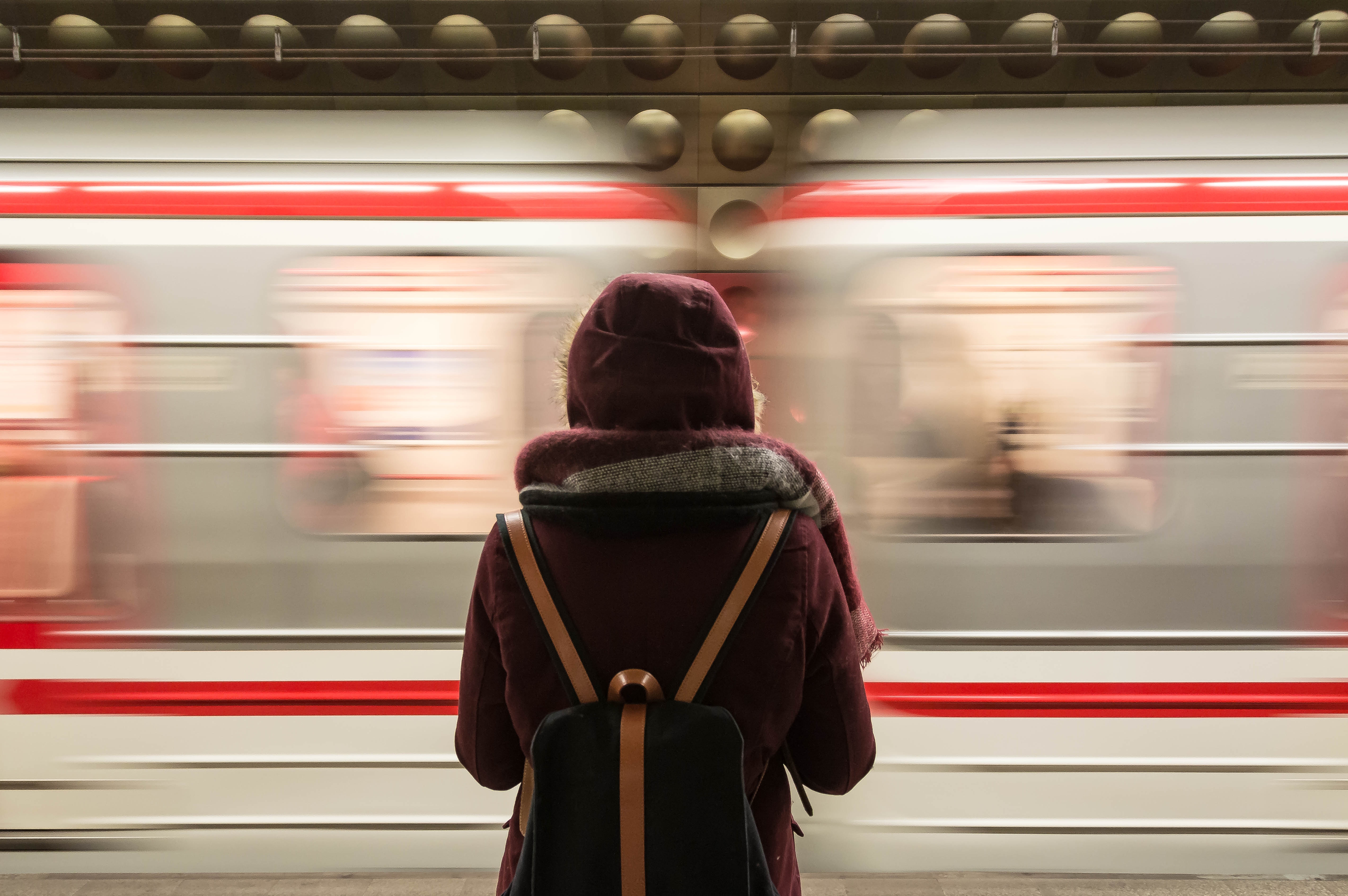
Let’s offer a train metaphor for our connection to thoughts. The main idea is that trains move, they come and they go, and so can our thoughts.
Our thoughts are apart of us, they are not the sole vote of our identity. On the other hand, if we have difficulty allowing the movement of thoughts, we can feel isolated and stuck.
On our best days, we filter out the unwanted:
The fear of potential conflict
The bad memories without resolve
The words we can’t take back
On our bad days, these thoughts flood our body with anxiety and depression. It feels like turning on the TV and being jolted by its’ forgotten full volume. This jolt directs energy inward to calm tension.

In this attempt, isolation results for many. We become too connected to our thoughts and lose our ability to be fair with ourselves and others.
Isolation is further pronounced by division of the inner and outer experience. Inside we feel stuck and outwardly we perform. We juggle engagement in daily and social roles yet face these inner thoughts alone.
We tend to minimize how much slower the internal returns in comparison to the external.
Our return can be filled with reluctance, dragging behind our inner thoughts like a child clasping to our leg as we walk. We may choose to remain fixated on thoughts.
So how do we give merit to our inner world and not live in isolation? How do we make space for our thoughts and be a present contributor to our relationships and roles?
Mindfulness and acceptance offers one way.
We won’t dismiss or minimize difficult thoughts, because on our bad days thoughts are difficult. We can however offer acceptance of thoughts and reduce the battle to ignore thoughts. Acceptance then gives birth to movement.
When we connect our thoughts with movement, allowing them to come and go and perhaps not setup camp, we give ourselves a choice.
We treat our thoughts similar to the movement of a train.
Sometimes we get on the train for one stop, and then get off; we go in and out of an internal thought, seemingly unscathed.
Sometimes, we choose to ride the train through the whole city; experiencing emotional collisions that feel paralyzing.
Sometimes, we watch the train arrive and are okay letting it depart without us as a passenger. We even wave kindly goodbye.

If we’re honest, sometimes we choose the train. The train feels like a mix of distress wrapped in comfort and the familiar.
It can feel like a love-hate relationship.
We are thankful for the train.
We fear the train.
Sometimes we need the train.
It also seems fair to wonder if we are drawn to the stimulation of the train? It seems sometimes we don’t want to be a present contributor to our relationship and roles; drawing inward seems helpful on our bad days. Perhaps the reprieve of isolation calms anxiety?
Sincerely, we ride the train for many reasons. We resist leaving the train for many reasons. Mindfulness offers mobilization and a healthier relationship with our thoughts.
So, when we ride the train, we allow ourselves compassion and patience to make it through. But then we give ourselves permission to get off the train when it’s time.
We make an agreement for the bad days that we’ll practice allowing movement in our thoughts. Movement will not solve each distressing thought, but perhaps breathing space. It offers the gift of distance from our thoughts; we kindly wave goodbye and re-engage.
Peace. Love. Gratitude.
 Mental Health & Journaling