

Good morning.
Today we are going to take a look at some potential solutions for physical symptoms of anxiety.
If you would like to see the first post on physical symptoms, see it here: Anxiety, Part 3: Physical Symptoms.
This list is only a sampling of common physical anxiety symptoms:
- Upset Stomach
- Sweating
- Increased heart rate
- Shallow breathing
- Fatigue
- Muscle tension
- Weight loss/gain
- Chest pain
- Dizziness
- Nausea
- Startle easily
In the anxiety cycle, physical symptoms often pop up after triggers:
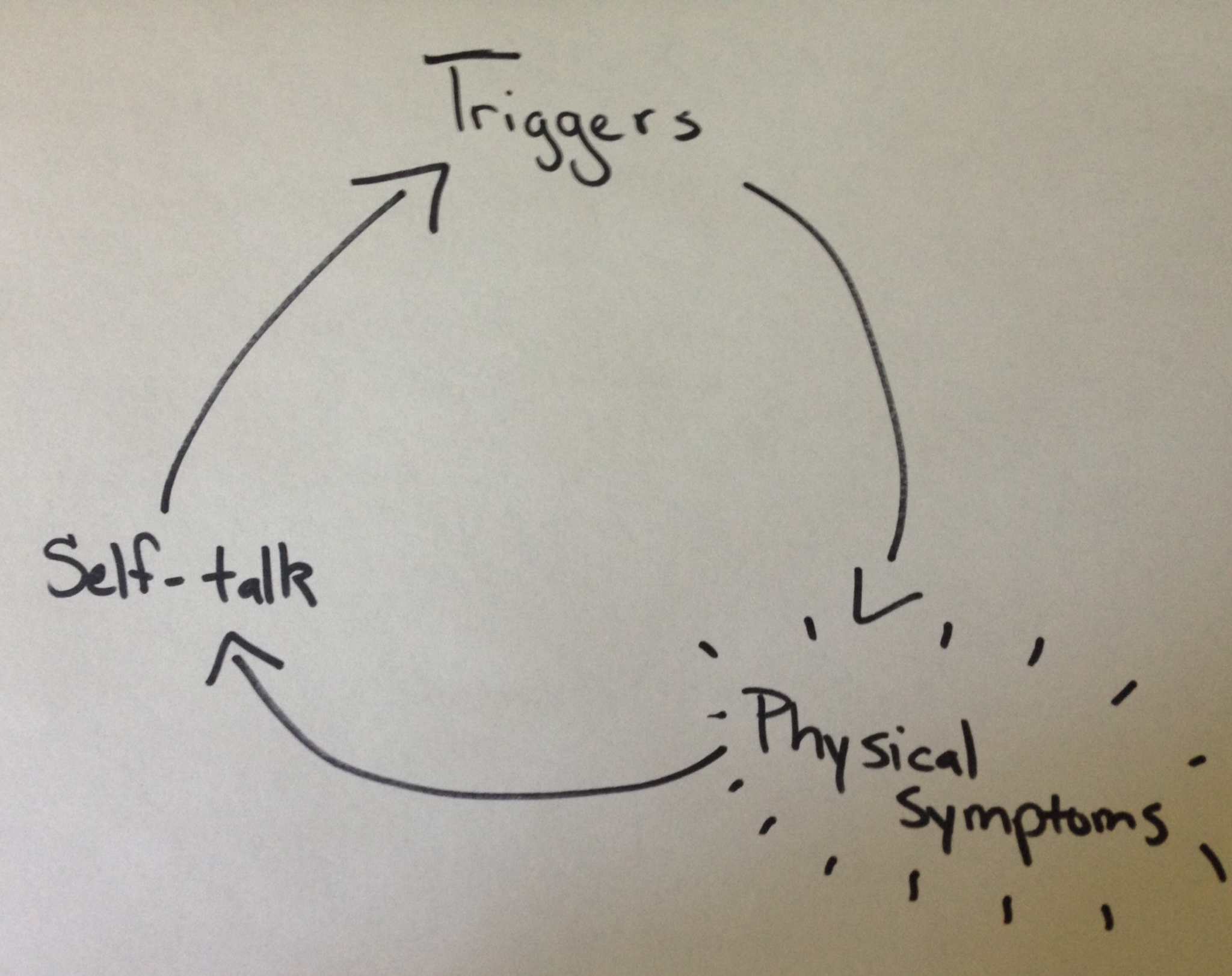
Please remember, the first step in solving physical symptoms is to become aware of them. After you become aware of them, they can become concrete indicators of anxiety. Because physical symptoms of anxiety can be quite concrete, I am going to be practical today in my solutions, here are a few solutions to consider in managing your anxiety.
Solution: reduce stimulation
One of the most practical things I have done to reduce stimulation is turn my phone on silent.
I found I was pulled away easily by the very ring of my phone. I became distracted from working on a priority of mine to deal with someone else’s priority. Even if I had the self-discipline to not answer my phone while the ringer was on, I often began wondering from a distance, well, I wonder what that was about…or…I’m sure it was _____ needing _____. Yikes! I was actually feeling symptoms like muscle tension and increased heart rate, when I began thinking about who needed me on the other line! Stimulation control was very important in my anxiety management journey, I imagine it would be as well helpful for yours.
For anyone, the ongoing stimulation of a phone, TV or social media, might be too much. It might be a good idea to turn down or off the stimulation and allow yourself to decide when you are responding to phones, social media and TV.
Further, you can experience physical overstimulation with people, crowds, kids, expectations, etc. You may have to put boundaries around how much stimulation you experience on a regular basis. You may need to physically remove yourself from stimulation for a time to ensure you are taking care of yourself.
I know for some of you, taking care of yourself might sound foreign, but taking care of yourself is one of the most important things you can do. Taking care of yourself ensures that you do your best work as a parent, employee, friend, spouse, significant other and so on. Contrary to common belief, the most selfless and helpful people are not always the ones who over extends themselves.
If you are experiencing physical symptoms of anxiety, it might be an indication that you are overstimulated. When your body and mind have too many things coming at you…
you may need a physical break my friend.
Becoming aware gives you the power to do something.
What is tricky about physical symptoms is that so often we aren’t aware of it until we are too overwhelmed. However, becoming aware of the small changes and escalation of physical symptoms can be done. You can track above symptoms to explore what’s too much for you. Do you know what is too much for you?
For example:
Identifying small changes in heart rate or breathing can be indicators of rising anxiety.
I have had clients use a heart rate monitor to indicate high points in the day. This helped clients identify in concrete ways, they were experiencing anxiety. Additionally, other clients have used a journal to document times they’ve had an upset stomach or a lot of fatigue. Tracking these symptoms were concrete markers that helped them recognize anxiety and when they needed a physical break.
Consider exploring your concrete markers that communicate anxiety and a need for physical distance.
If you do decide to monitor any of the above physical symptoms, be sure to track it over a reasonable amount of time (at least a few weeks) and consider the following:
- When are the high points?
- Do you know when your body is at rest?
- At play?
- Anxious?
- At what point is anxiety obvious?
Solution: Get your body checked
In the awareness section of this series, we discussed quality of life Anxiety, Part 3: Physical Symptoms. Take a minute to consider if the physical symptoms you experience have been affecting your quality of life. I would test this idea by considering how you experienced the last few events in your life.
What sort of quality of life did you experience in those last few events? Did you barely make it through? Was anxiety your focus? Did your physical symptoms distract you from being present and experiencing the meeting, party, event?
If your physical symptoms override your quality of experience, take some time to check out what is happening with your body. I would suggest even seeing a doctor about your symptoms. For me personally, collaboration with a doctor and making some dietary changes was helpful in reducing my anxiety.
I would caution you, some physical symptoms can be a disguise to dealing with the core of anxiety. Anxiety can have a nasty habit of looking like a stomach ache but actually being anxiety. However, meeting with a doctor can be one way to explore the roots of some of your physical symptoms.
Solution: Consider Medication
Usually, the moment I suggest anxiety medication, people become uneasy. I am not saying that it is the cure for everyone’s situation. I do think, that some people’s anxiety has overcome so much of their life that for a time, medication can be a good option.
What can medication offer?
It can offer the opportunity for you to focus on making lifestyle changes, while the medication helps you biologically manage anxiety. To be clear, you can definitely experience a ton of anxiety even on medication. Medication alone will not solve all your anxiety problems, but it could help. If you choose the route of medication, you must accompany it with lifestyle changes for sustainable change.
I would say, if you have experienced anxiety for a long time, having a conversation with a doctor that you trust is a good step. A conversation with a trusted doctor should be an open conversation, you do not have to begin medication. You can however, become informed of your options and in control of your next steps. And let’s say you do begin medication and you later decide it is not for you, you can always try other options. *Be sure to follow doctor’s orders on how & when to start and stop medication.
The decision to try a medication option is personal. My suggestion is to not be closed off to valid options.
–
Anxiety can be a dark tunnel with what seems like few options. One of my goals is to help you identify more options and then let you be in control of how you gain better quality of life.
–
The three options above to manage your physical symptoms of anxiety are three of many. Take what has been helpful and leave what is not. Next week we will move on to solutions in self-talk. Enjoy your week.
Photo Credit: http://www.courtneyalyson.com
 Mental Health & Journaling