

Let’s be honest, my coffee is very strong this morning, so I am a tad spunky!
However, my child is still sleeping so I have a few extra minutes to finish this post!
Alright, let’s move to another part of anxiety.
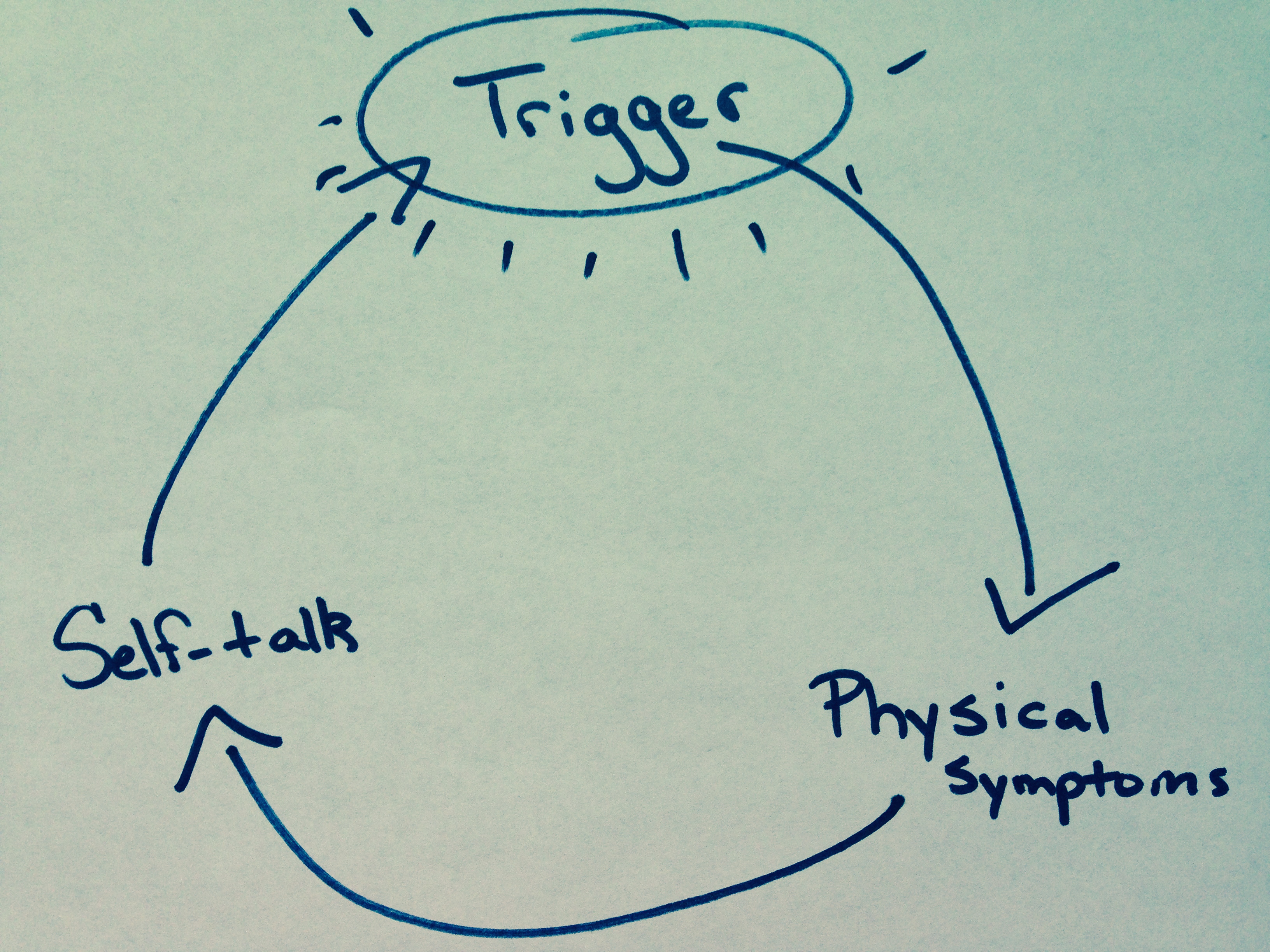
I want to introduce you to the visual of the anxiety cycle.
Rather than isolated and circumstantial, most things in our life are cyclical and contain themes. And since they are cyclical and thematic, I believe we can become mindful of our patterns and perhaps change them. If you read the first part of my anxiety series, the connection of awareness to change would be why I would recommend externally processing (journaling, friend, or therapist).
Okay, let’s take a look at the anxiety cycle:

This is an overview of the anxiety cycle, today we are just going to talk about triggers. We will touch on the physical symptoms & self-talk, but go more into detail on those in later posts.
Here are the basics:
Triggers: These are places, people and conditions that are fertile ground for you to experience a lot of anxiety.
Physical Symptoms: These are actual physical symptoms you can feel when in a state of anxiety. Upset stomach, sweating, increased heart rate and shallow breathing are all possible physical indicators you are experiencing anxiety.
Self-talk: What you say to yourself (mentally and verbally) is called self-talk. Self-talk is an important part of anxiety management because it indicates your state of mind. When you are anxious, are you extremely black and white? negative? fatalistic?
Understanding your own self-talk can be helpful as it helps understand what filter you are using to look at the world.


The filter we use to look at life takes part in managing anxiety.
More on physical symptoms and self-talk later.
Let’s focus on triggers:
You may feel “anxious” to begin work on all these areas…that’s normal and understandable, but don’t do that. Tackling all three areas at once is too overwhelming and will become unproductive.
*Side note, if you have an urge to tackle all these at once, it’s probably something you do with many areas of your life. Remember, patterns & themes are common in life. Let’s slow down and take one thing at a time.
Self-disclosure! I am tempted to do this as I write this blog! I sincerely want to share all the concepts and tips that I have so we can fix it all real quick! But, that is neither helpful or realistic to do in a post or two. We must take on the slow process of sustainable change.
Ok, back to the anxiety cycle. Let’s just take the “triggers” and talk about them today.
Triggers are often places, conditions or people. For me, as I shared in the last post, my trigger is being late!
Here are some other common examples of triggers:
-Big crowds
-Public speaking
-Overly demanding people
-Tight schedules -Exhaustion
-Kids….just kidding! (well sort of…)
-People with whom you have baggage
-Feeling insecure
These are examples of triggers I have seen that tend to bring anxiety. This is a small list, your trigger(s) may be different.
Because we are doing a series, if you haven’t read the first part you may have a hard time following this next part. In short, “1” communicates low anxiety and “10” communicates high anxiety.
With the scale in mind, it is important to know your triggers and how they affect you. If a trigger puts you at a state of anxiety that is a “7” you should know that. If the thought of one of your triggers puts you at a “7” you should also be aware of that. Most people know when they are at a “10” and when they are at a “1.” Most people can tell, because they are such extremes. It’s easy to know when you are about to lose it and when you are perfectly relaxed.
What I want to do is help you find and intercept the stages that lead to a “10.” Thus, the purpose of this exercise is to help us become aware of when we are at the mid to high states of anxiety.
For a glimpse of the big picture, further down the line we will work to intercept our own cycle before it gets to a “9” or a “10.” But this only comes with first examining our own triggers. If you are externally processing (journal, friend, therapist), these are the concepts I would consider:
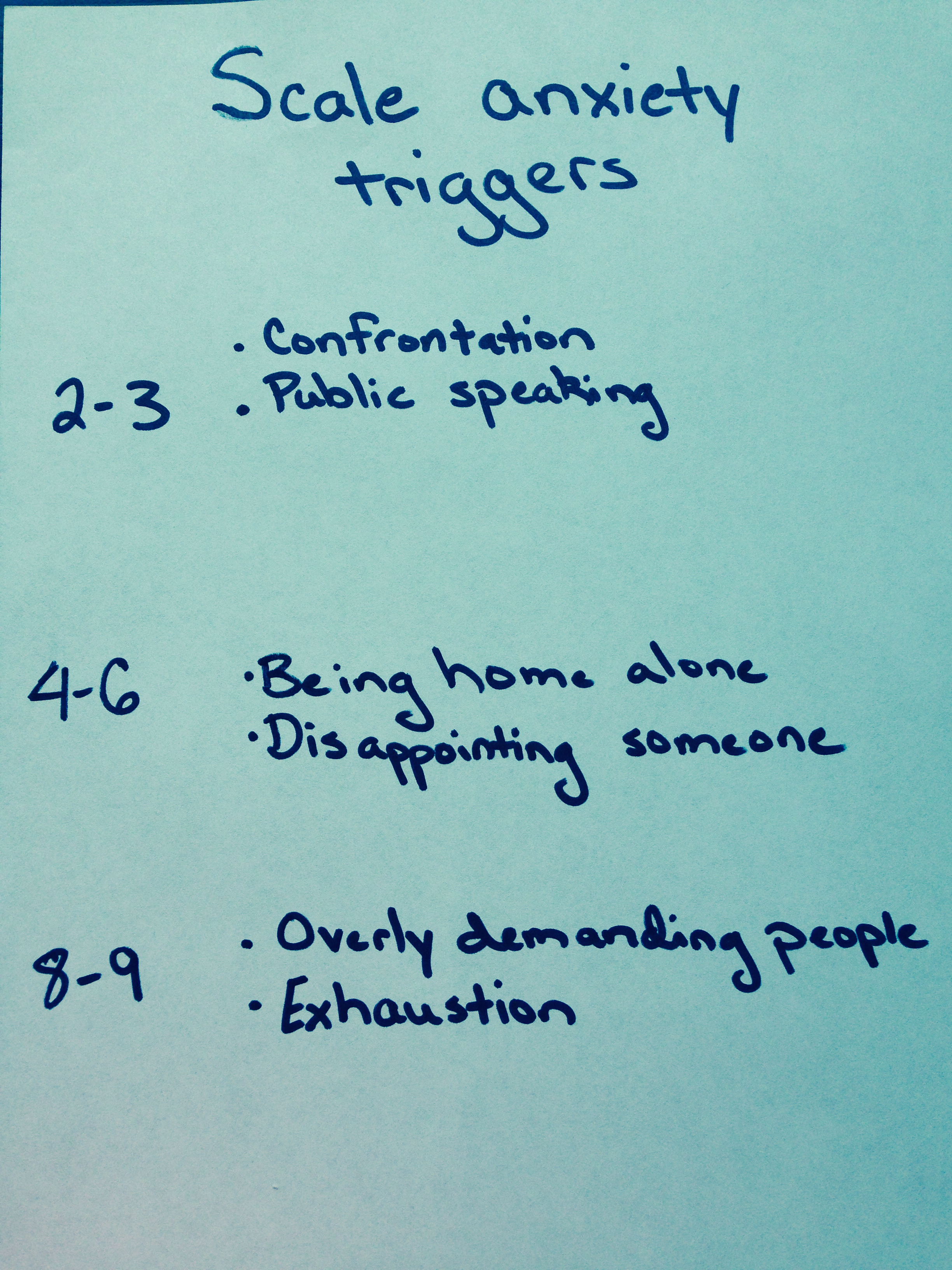
1. Scale your triggers, which ones are 2s & 3s and which ones are 9s & 10s, etc (refer to list above). This is an example from the options given above:
2. How much time do you spend a day physically around these triggers?
Now, what might be easy during this external processing, is to begin blaming other people for your anxiety.
Don’t do that!
Your anxiety is not someone else’s responsibility to maintain or manage, it is yours.
Yes, people are hard and can create hostile environments to live with low anxiety, you have no argument on this side of the screen. Even so, if you leave anxiety management up to someone else, you will be disappointed, I promise. Work hard to be aware of your responses during the exercise and just know, you have my empathy. I know humanity can be very challenging.
Let’s stop here for today, next week we will talk about the next stop on the cycle, physical symptoms.
Photo credit: http://www.courtneyalyson.com
 Mental Health & Journaling
One thought on “Anxiety, Part 2: Triggers”