
A desire of mine is to bring an educational piece to my counseling. Personally, I grow a lot more through education and definitions. I imagine there are several other like-minded individuals out there.
Today, I want to talk about codependence. This topic is near and dear to me as I have struggled with it. Learning the following concepts truly helped me live a more fulfilling and purposeful life.
First, let me give you a working knowledge of what codependency is.
Codependence can be defined many ways, below is my perspective on it:
Codependence is an unhealthy leaning upon others, emotionally, physically or mentally.
Codependency can mean you have a hard time emotionally separating yourself from others.
Codependency can mean you struggle with disappointing others.
Codependency can mean you have a hard time standing on your own.
From my experience, codependency is a very common issue.
Now, what I am not saying, is that we should all live on an island, unaffected by others’ opinions, feelings and emotions. What I am saying, is many struggle with being overly affected by others’ opinions, feelings and emotions. Living a healthier life may come with becoming less codependent on others.
Awareness is always where I like to start when it comes to dealing with any of these types of issues. Here is a visual I like to use for understanding codependence:
The Leaning individual : Codependent
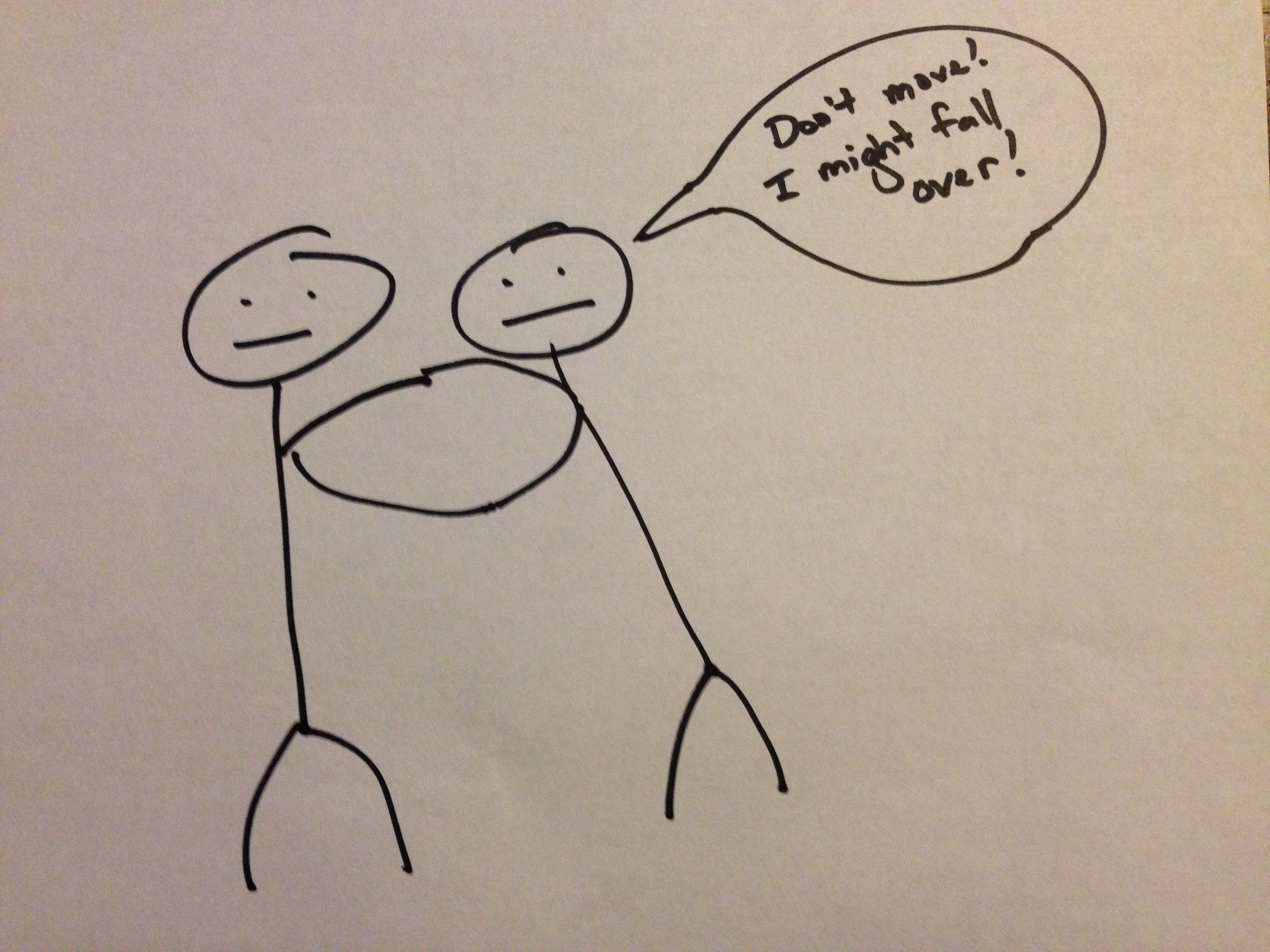
This visual above depicts one’s leaning on others to an excess. If the support person is not there, the codependent may fall on their face due to their over investment in another. The leaning individual has little inside of them supporting themselves. The codependent is likely thus, easily influenced.
As a counselor working with a client, my desire would be to help a client move closer and closer to the following visual.
The Independent Individual: Less Codependent
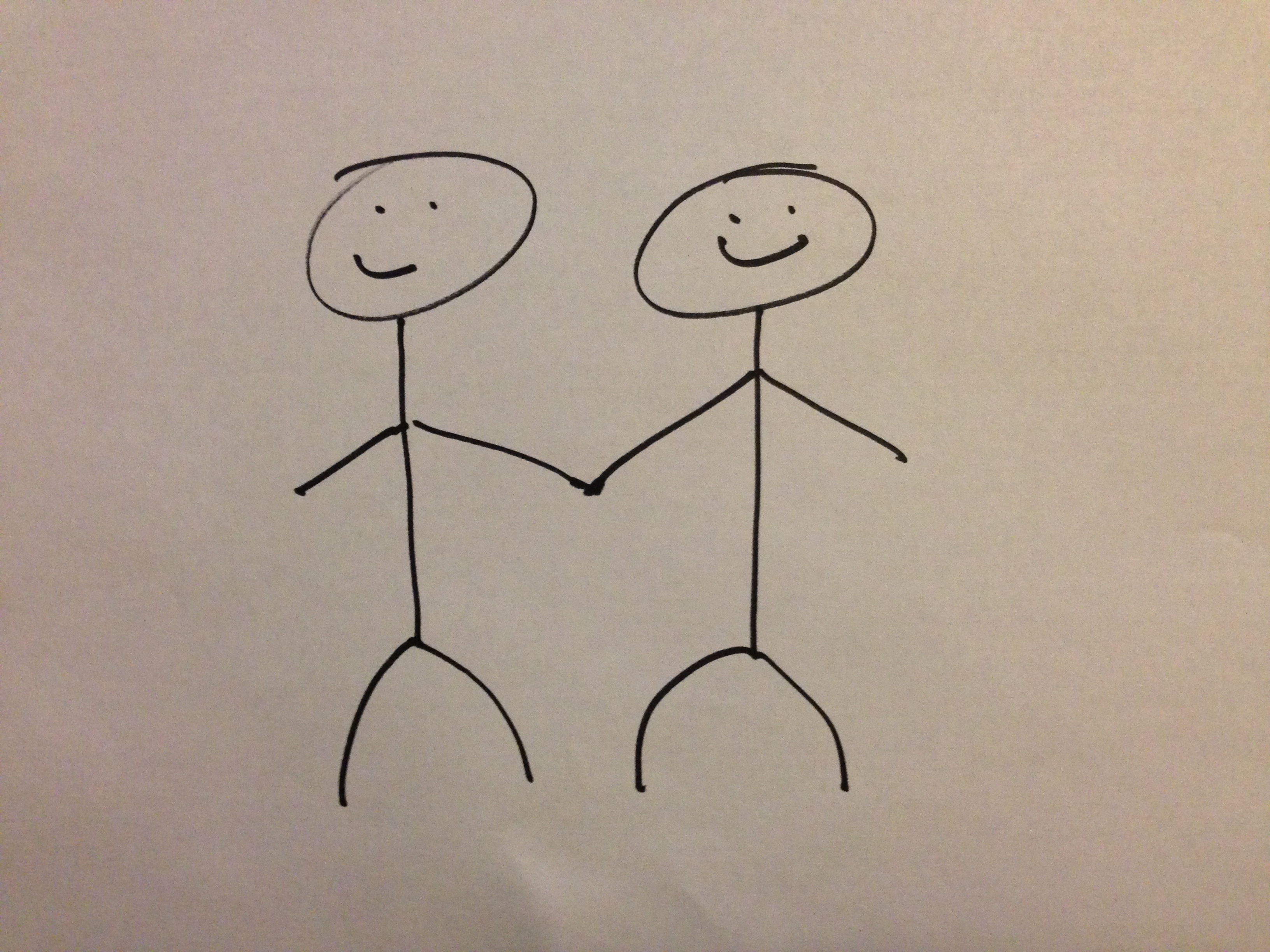
This individual is still connected to the people around them, but in a healthier way. They are able to stand on their own. The less codependent individual is able to sift through their own thoughts, opinions and emotions without being overly dependent on the consent of others.
I learn through visuals and examples. If this is the same for you, we will be good friends!
Examples of relationships that can be codependent:
If someone close to you is having a bad day, are you able to have compassion and empathy for their situation yet still invest in your own day? A codependent may become paralyzed in their thoughts and emotions. A codependent may want to become overly involved in the “making it better” for the other person process. A codependent will have a hard time emotionally separating themselves. Again, a healthy person can maintain compassion and empathy but not become stuck emotionally in the process.
Here is a visual that will help illustrate an unhealthy vs. healthy connection with others:
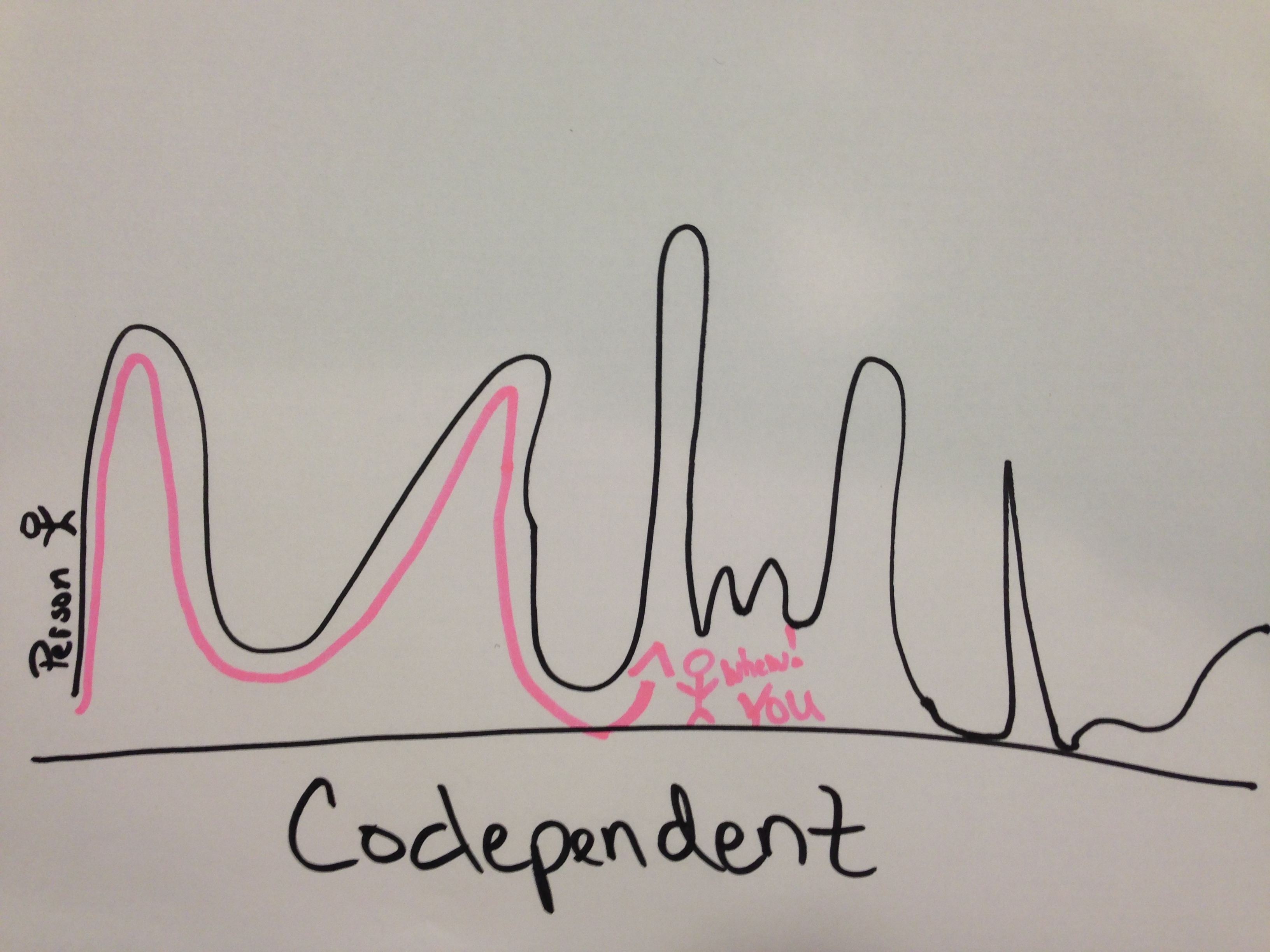
The black line (labeled ‘person’) shows the emotions of someone in your life.
The pink line (you) illustrates how a codependent person can “codependently” follow the emotions of another.
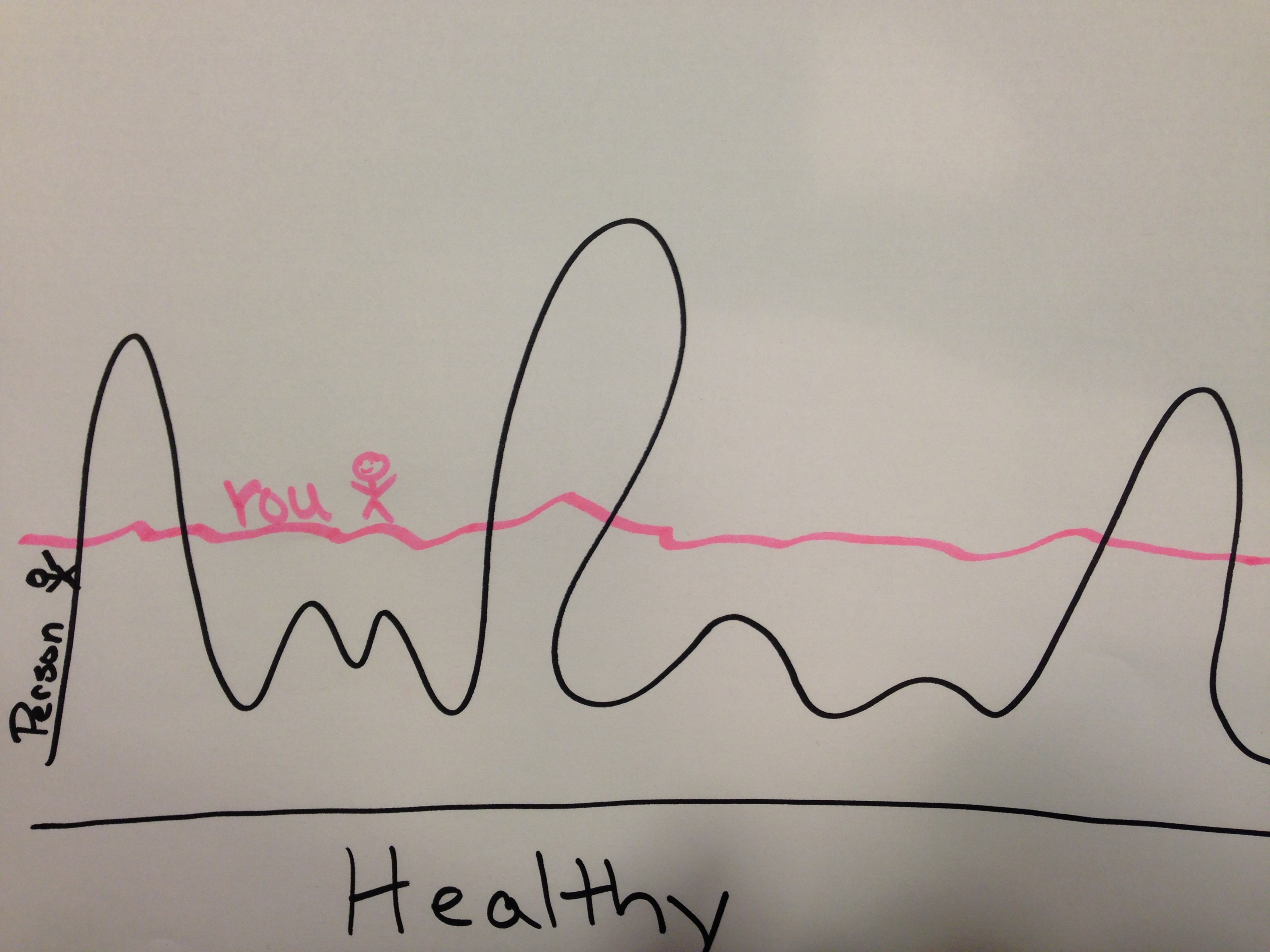
The next illustration shows (you) maintaining a healthier emotional balance:
Other examples of codependency:
Another example I have seen is one’s feeling of over-responsibility. I see a lot of parents struggle with this, they feel overly responsible for their adult child’s decisions. As a parent we continually want to be connected and compassionate with our adult children, but there is a line of responsibility. Your adult child’s decisions are not your fault, good or bad, they are adults who live with the same consequences as you do.
My last example is in marriage. Codependency is very common in marriage. We should be somewhat dependent on our spouse, that is normal. But when we are too fixated on fixing them, teaching them and/or feeling responsible for them, we have crossed a codependent line. Living as individuals is very important for your longterm marital success.
Quick note: Frequency is key. I think a healthy person can over invest every once in a while without it being a clinical problem or it being labeled a ‘codependent.’ Patterns are what we should be aware of. If codependent relationships are a pattern in your life and you are often over invested, that is when red flags should go up.
For me, the principle in codependency is awareness. You should know where you are invested.
If you have struggled with codependency for a while, it may be hard to be objective in your own life. A step in awareness may be asking someone to help you look honestly at your place on the codependency continuum. Even if you aren’t ready to have a conversation about it, maybe take a look at your state of anxiety around potential codependent relationships. Often when anxiety goes up, codependency tends to follow.
Anxiety will be a topic we will tackle in a few weeks as it is one of my favorite topics.
Book to consider reading on codependence:
Melody Beattie, Codependent No More
 Mental Health & Journaling